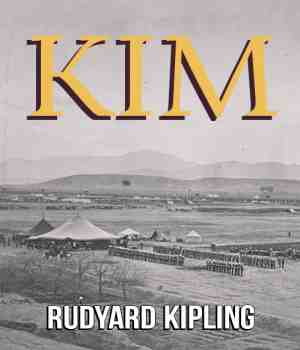
Kim is a novel by Nobel Prize-winning English author Rudyard Kipling. It was first published in book form by Macmillan & Co. Ltd in October 1901. The story unfolds against the backdrop of The Great Game, the political conflict between Russia and Britain in Central Asia. The novel made the term "Great Game" popular and introduced the theme of great...More
Joseph Rudyard Kipling was an English journalist, short-story writer, poet, and novelist. He was awarded the Nobel Prize for Literature in 1907, as the first English-language writer to receive the prize, and at 41, its youngest recipient to date.
He was born on 30 December 1865, in Bombay to British parents, and brought up by a Portuguese nanny and an Indian servant, who would entertain him with fabulous stories and Indian nursery rhymes. That inspired much of his work. Kipling's works of fiction include The Jungle Book (1894), Kim (1901), and many short stories, including "The Man Who Would Be King" (1888).
Joseph Rudyard Kipling was an English journalist, short-story writer, poet, and novelist. He was awarded the Nobel Prize for Literature in 1907, as the first English-language writer to receive the prize, and at 41, its youngest recipient to date.
He was born on 30 December 1865, in Bombay to British parents, and brought up by a Portuguese nanny and an Indian servant, who would entertain him with fabulous stories and Indian nursery rhymes. That inspired much of his work. Kipling's works of fiction include The Jungle Book (1894), Kim (1901), and many short stories, including "The Man Who Would Be King" (1888).
Book Summary
Kim is a novel by Nobel Prize-winning English author Rudyard Kipling. It was first published in book form by Macmillan & Co. Ltd in October 1901. The story unfolds against the backdrop of The Great Game, the political conflict between Russia and Britain in Central Asia. The novel made the term "Great Game" popular and introduced the theme of great power rivalry and intrigue.
It is set after the Second Afghan War which ended in 1881, but before the Third, probably in the period 1893 to 1898. The novel is notable for its detailed portrait of the people, culture, and varied religions of India. "The book presents a vivid picture of India, its teeming populations, religions, and superstitions, and the life of the bazaars and the road."
In 1998, the Modern Library ranked Kim No. 78 on its list of the 100 best English-language novels of the 20th century. In 2003 the book was listed on the BBC's The Big Read poll of the UK's "best-loved novel."


 Rudyard Kipling

